
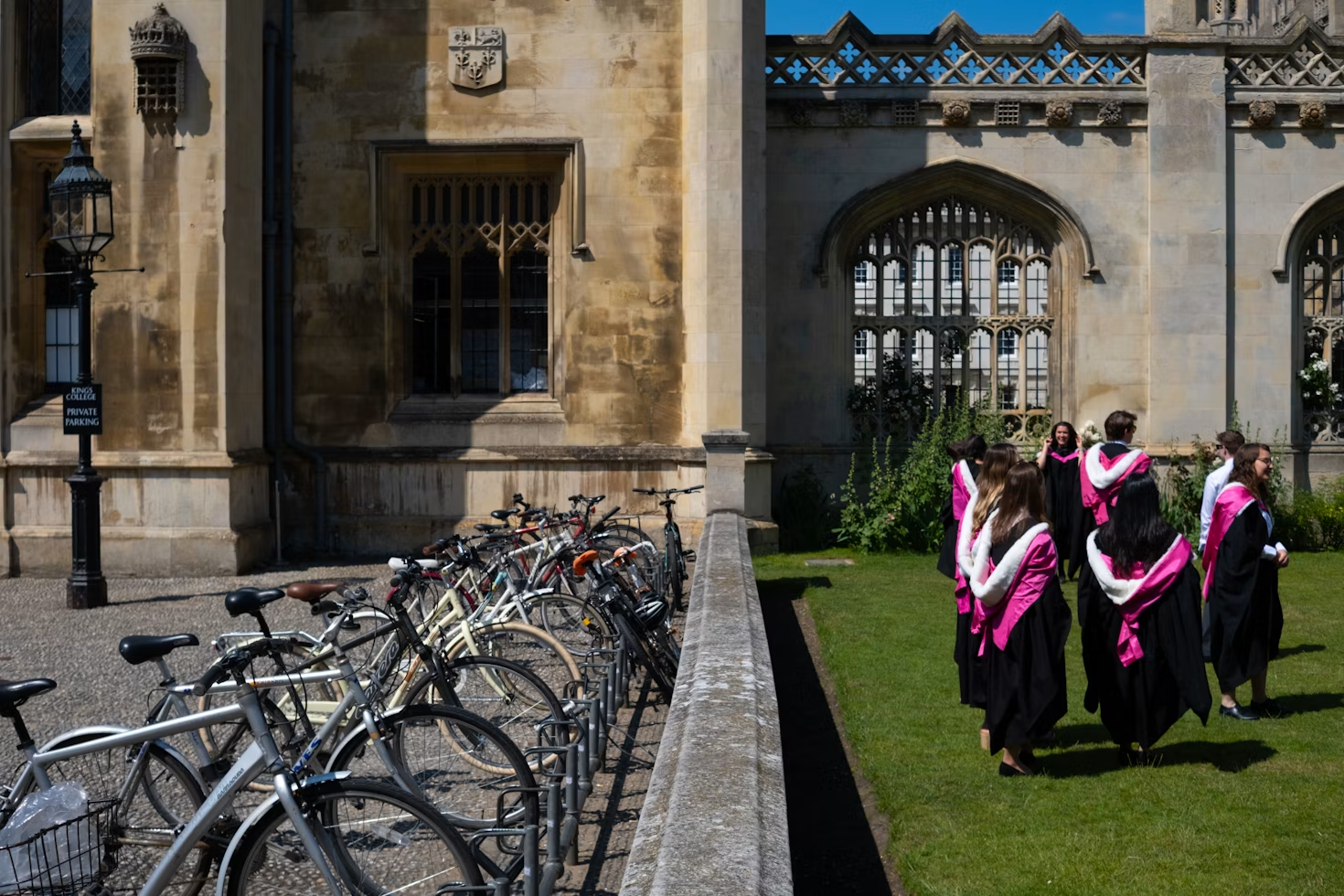
As another academic year draws to a close, schools, colleges and universities across the UK enter a crucial period of estates planning.
While classrooms empty, lecture theatres become quieter and student accommodation prepares for a new intake, estates teams turn their attention to maintenance, refurbishment projects and compliance planning ahead of the next academic year.
Issues such as fire safety, asbestos management and legionella controls are often built into summer programmes, but radon is still frequently overlooked.
The summer break is not the right time to complete radon testing as buildings are unoccupied, which may give inaccurate results. However, it is an ideal opportunity to review existing risk assessments, plan testing programmes and ensure any required action can be scheduled with minimal disruption.
Why Educational Buildings Need to Consider Radon
Educational buildings are often particularly complex environments.
A single school or university campus may include:
- Classrooms
- Laboratories
- Libraries
- Sports facilities
- Administration offices
- Student accommodation
- Basements and plant rooms
Many of these spaces are occupied for long periods throughout the year, making indoor environmental quality an important consideration.
Radon can affect any type of building and is found throughout the UK. Because it is colourless, odourless and invisible, testing is the only way to determine whether elevated concentrations are present.
Long-term exposure to high levels of radon increases the risk of lung cancer, making it an important issue for organisations with responsibility for the health and wellbeing of building occupants.
Summer Creates an Opportunity to Plan Ahead
Educational buildings present unique challenges when it comes to radon testing.
During term time, classrooms, lecture spaces, laboratories and accommodation areas are constantly in use, making access and coordination more difficult.
The summer period gives estates teams the opportunity to:
✓ Review previous radon results and testing records
✓ Identify buildings requiring assessment
✓ Plan testing before students and staff return
✓ Schedule detector placement around INSET days and staff preparation periods
✓ Arrange mitigation works during planned holiday shutdowns
For many schools and universities, early September can be an ideal window to deploy 3-month radon detectors before full occupancy resumes, but close enough to students returning to provide accurate results.
Planning Mitigation During the Holidays
Where elevated radon levels have already been identified, the summer break can also provide a valuable opportunity to complete mitigation works.
Radon reduction systems are often installed during school holidays to minimise disruption to staff and students.
Early planning allows estates teams to:
- Arrange a design survey
- Agree the most appropriate mitigation approach
- Schedule installation works around the academic calendar
- Place repeat radon monitors in buildings before they become fully occupied once again.
Have Your Buildings Changed Since They Were Last Tested?
Many educational institutions are investing heavily in their estates.
Over recent years, schools and universities have undertaken projects ranging from energy efficiency improvements and window replacements to new teaching blocks and major refurbishment programmes.
These changes can alter how a building performs.
For example:
- Improved insulation can reduce natural ventilation
- New windows can increase airtightness
- Building extensions can introduce new ground-contact areas
- Ventilation upgrades can affect internal air movement
If significant changes have been made since previous radon testing was undertaken, it may be appropriate to review whether additional assessment is required.
Universities Face Unique Challenges
For universities, managing radon risk can be particularly complex.
Large estates often include multiple campuses, historic buildings, laboratories, offices and student accommodation, each with different occupancy patterns and construction methods.
Student accommodation needs particular attention. Testing when buildings are empty or occupancy changes quickly may not reflect typical exposure accurately and increases the risk of detectors being removed or lost.
Planning testing around the academic calendar helps ensure results accurately reflect how spaces are used.
Radon and Compliance
Educational institutions have a responsibility to provide safe environments for staff, students and visitors.
While radon requirements will vary depending on location and building type, organisations should be able to demonstrate that relevant risks have been assessed and managed appropriately.
Increasingly, we are seeing schools, universities and public sector organisations taking a more proactive approach to radon as awareness continues to grow across the UK.
Before September Arrives, Ask One Simple Question
“Do we have a clear understanding of radon risk across our sites?”
The summer period is the ideal time to review, plan and prepare.
Whether you need to arrange testing, discuss mitigation options or review your existing radon management strategy, PropertECO’s radon experts can help.
PropertECO works with schools, academy trusts, colleges and universities across the UK to deliver radon testing, monitoring, compliance support and mitigation services.
Whether you’re responsible for a single school site or a multi-campus university estate, our team will help you understand and manage radon risk with confidence before the new academic year begins.


